Organizational Analysis: The Oppia Foundation
This paper analyzes a cause-driven organization engaged through first-hand volunteering, examining how it pursues social change within a larger complex social system. Drawing on direct engagement, background research, and systems thinking, the analysis critically evaluates the organization’s stated purpose, theory of change, and alignment between mission and action.
By applying concepts from complex systems, complex agents, and individuals in society, the paper maps key stakeholders, power dynamics, and patterns of conformity that shape the organization’s impact. Rather than proposing new solutions, the analysis assesses the organization’s effectiveness, constraints, and sources of influence within its social ecosystem, demonstrating how systemic interactions enable or limit meaningful social change.
Organization Description
The Oppia Foundation is a nonprofit organization, founded in 2015, with a mission to ‘empower learners across the globe by providing access to high-quality, engaging education.’ (The Oppia Foundation, 2024). As prompted by its mission, Oppia strives to make education accessible by providing their educational platform for free, underlining the need to focus on communities worldwide that may not have the resources to provide high-quality education. They mainly target students ages 8-14 in rural communities of South America and Sub-Saharan Africa, as well as orphanages, refugee centers, shelter homes, and war-torn regions where education may be hard to access (The Oppia Foundation, 2022).
Its main product is the Oppia platform (available on Android and website), an open-source tool that enables educators to create interactive learning experiences following a universal curriculum. These lessons are designed to educate learners through step-by-step guidance, feedback, and practice, ensuring an engaging experience. The primary subject materials revolve around mathematics; as prompted by secondary research, Oppia found several studies indicating a strong correlation between basic numeracy skills and improved life outcomes (The Oppia Foundation, 2022). Oppia has a consistent and weighted purpose supported by research and cohesion between their values and actionable intentions.
Theory of Change
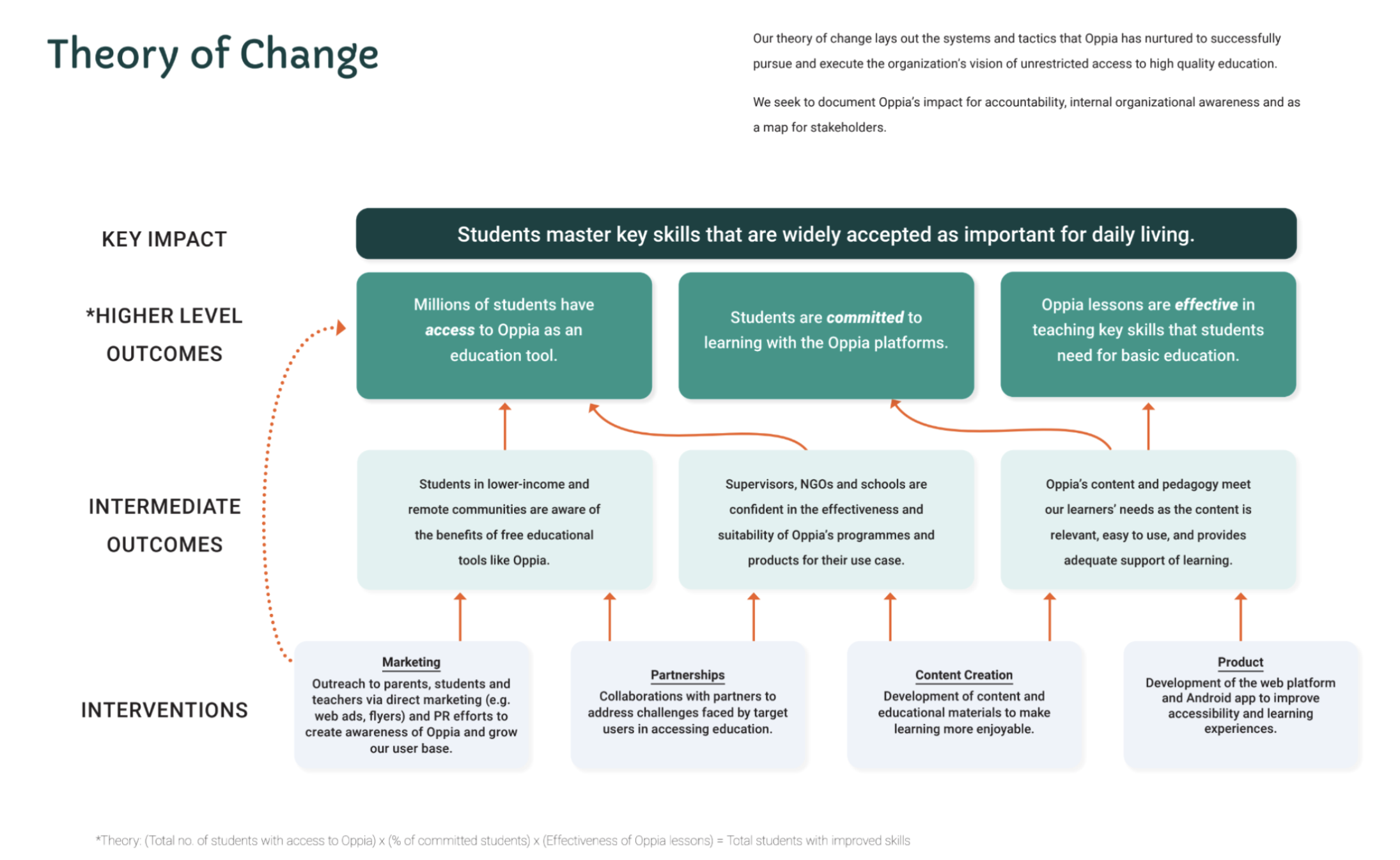
Figure 1. Oppia’s Theory of Change diagram as taken from the Oppia Impact Report 2022 (The Oppia Foundation, 2022).
In Oppia’s theory of change concept, their key impact states, ‘students master key skills that are widely accepted as important for daily living’ (Figure 1). This statement reflects Oppia’s perspective on what ‘education’ is and its context within society. Here, the words ‘skills that are widely accepted’ underscores the ever-evolving standards of education.
Human societies have developed into complex systems—defined by politics, economics, and social structures—that operate independently from natural systems. On a micro-level, individuals born into these systems must explicitly learn how to navigate them —through education. The more well-educated someone is, the higher their likelihood of thriving within society. Conversely, the lack of education can be detrimental.
As our societies have developed, so have the standards of what ‘well-educated’ means, both practically and culturally. On a meso-level, the United States provides a clear example of this shift. In 1950, only 7.7% of U.S. citizens aged 25–29 held at least a bachelor’s degree. By 2010, this number rose to 31.7% (Horowitz, 2019). From a practical standpoint, this increase is closely tied to the growing demand for white-collar jobs, particularly driven by the rise of the technological sector in the 20th century, which required a workforce with stronger educational backgrounds (Roe, 2001). Culturally, the negative stereotyping of trade jobs arised because of its comparatively laborious nature and low income to white-collared occupations (Parietti, 2024). This perception has been largely dramatized as higher education became increasingly expensive, turning it into not only an indicator of intelligence but also a symbol of prestige.
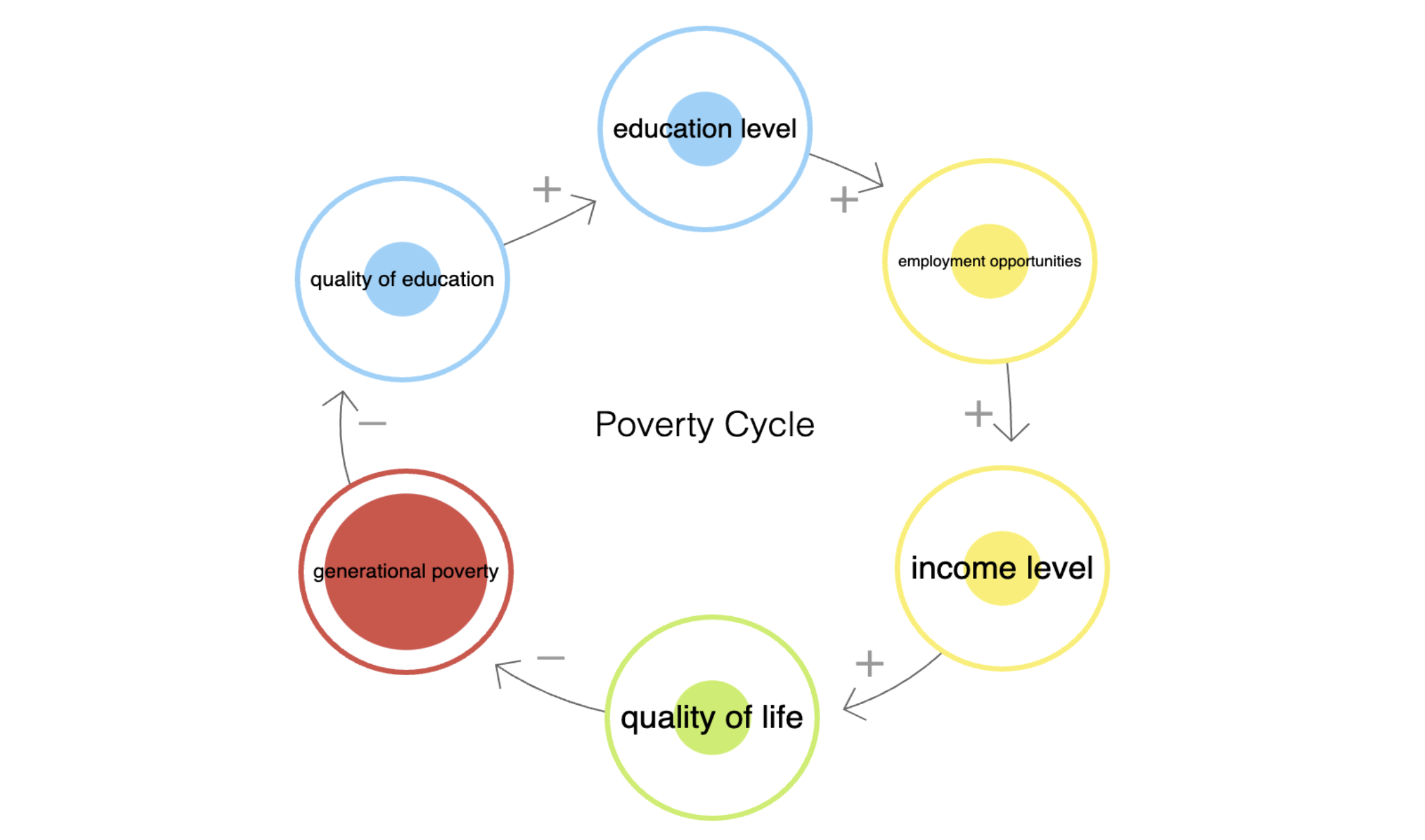
Figure 2. Poverty cycle causal diagram.
On a macro-global level, as countries improve their labor force development and educational standards, exacerbating the inequality gap for lower-income nations that lack the resources to provide comparable quality and accessibility of education. This disparity perpetuates a poverty cycle in many communities around the world, wherein a weak educational background sufficiently contributes to low-income opportunities. In turn, low income limits access to higher-quality education, further reinforcing the cycle (Figure 2). Intergenerational poverty is notoriously difficult to escape, as this feedback loop continuously traps marginalized populations. Breaking this cycle requires addressing systemic barriers that prevent equal access to quality education on a global scale.
Analysis of Power and Social Engagement
This is where Oppia’s vision stands: to have ‘a world where access to high-quality education is not a privilege, but a universal human right.’ (The Oppia Foundation, 2024). Oppia has recognized the power of education as an intervention of poverty cycles, decreasing socioeconomic inequality, and improving quality of life (Figure 2).
Here, we can distinguish two dynamics of power: the source providing Oppia power to work and function, and how Oppia itself sources power to those they impact. To map this dynamic further, we can highlight the groups that engage with Oppia: donors —agents that fund Oppia’s work; volunteers —the primary drivers of Oppia who willingly contribute their skills to deliver and develop its products; educational supervisors —the teachers, principals, parents, and partnering NGOs that are in direct contact with local students and are Oppia's main point of contact when bringing products into local communities; students —the primary users of Oppia's product.
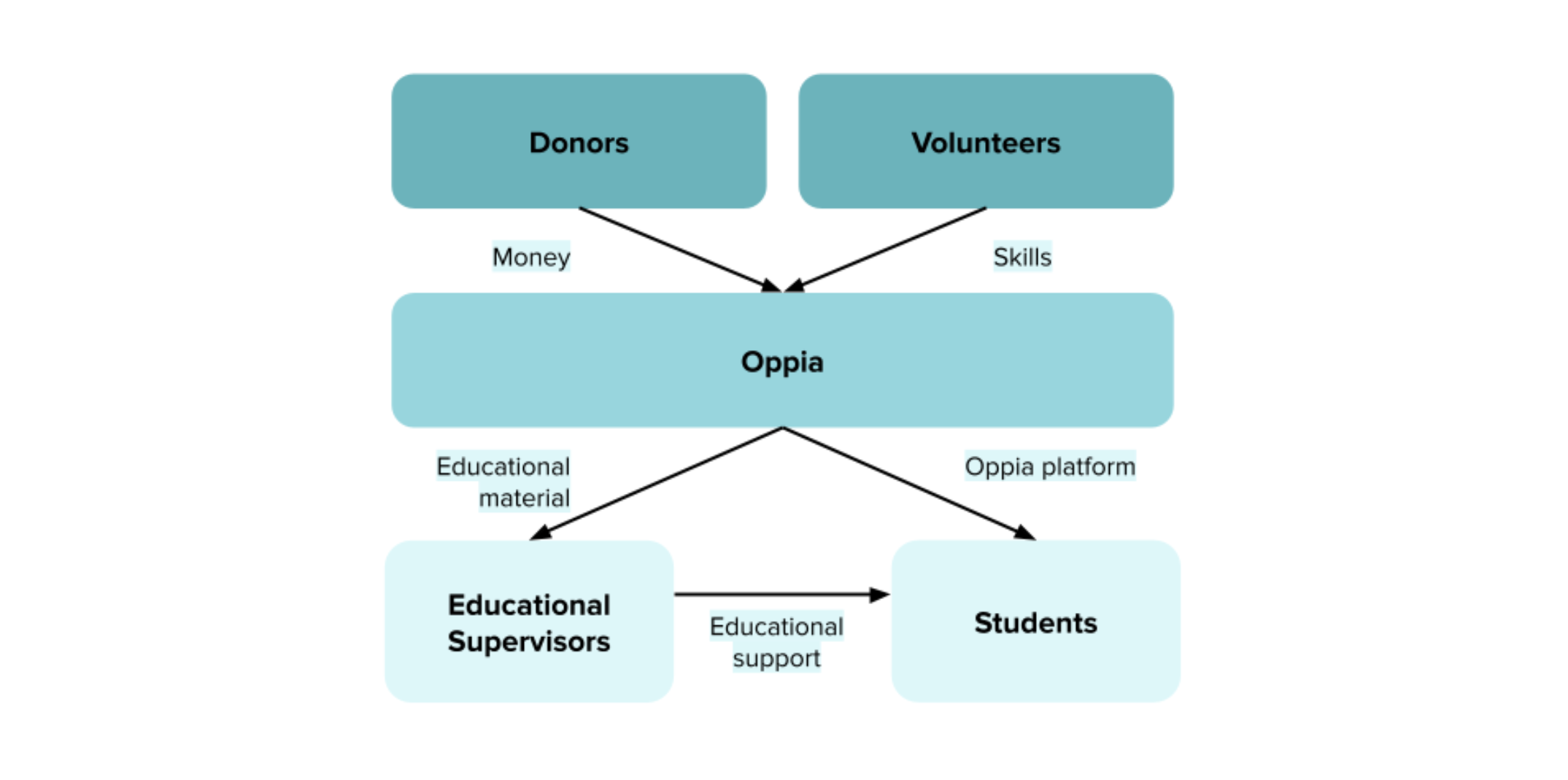
Figure 3. Oppia mapping of power distribution and engagement between significant agents.
As shown in Figure 3, the distribution of power within Oppia is linear. At the top of this dynamic are investors and contributors. Oppia primarily sources monetary investments through private grants and fundraising efforts (The Oppia Foundation, 2022). Meanwhile, contributors consist of a largely volunteer-driven workforce with over 200 volunteers distributed across Oppia’s functioning teams.
The core challenge for sustaining a non-profit organization like Oppia lies in securing money and talent. Resource providers—volunteers and investors—often receive no direct return on their contributions, yet their willingness to commit is essential. This challenge can directly impact the sustainability, consistency, quality, and development of Oppia’s deliverables if not properly addressed.
While financial resources are straightforward in terms of their impact on programs, they can be difficult to consistently secure, as Oppia relies on grants and foundations requiring ongoing applications. V olunteers, on the other hand, are easier to source but come with significant managerial complexities. As volunteers are not financially compensated, they must have a social incentive driven by the organization’s mission and team culture on an ideological level. If volunteers are not adequately engaged, progress will stall, and if they lack commitment, productivity may suffer due to frequent turnover and inconsistent contributions. Especially as Oppia’s product is open-source which relies on voluntary work, consistency and productivity are the biggest concerns due to the lack of absolute control and power Oppia has over their contributors.
Oppia’s point of impact is its ability to empower individuals marginalized by socioeconomic barriers through its free educational platform. By providing accessible education, Oppia disrupts the traditional gatekeeping of knowledge and challenges systemic inequalities perpetuated by cost-prohibitive education systems. This, in turn, diminishes the influence of wealth as a determining factor in educational access. This is connected to the current perception around education being a symbol of status and wealth. Instead, Oppia reinforces the norm that everyone should have access to quality basic education —no matter their socioeconomic status, gender, and race. This norm is typically disturbed by systemic inequalities around education in which normalizes many emergent behaviors such as wealthier people typically having better education (e.g. expensive university tuitions, private school), men tending to be more educated compared to women (stemming from gender roles and expectations), amongst many other stereotypes around the world.
Oppia also collaborates with on-site NGOs and educational institutions from targeted communities to ensure a better understanding of how Oppia can adapt their product to be relevant and impactful towards those communities (The Oppia Foundation, 2024). They are Oppia’s main channel to spread and deliver their educational product to younger students, and are also the most critical to instigating Oppia’s theory of change. We see this in Figure 1, where one of its main interventions is marketing towards not only students but also teachers and parents.
Effect and Extent of Impact
As of 2024, Oppia has reached over 10,500 active users across its educational website and Android platforms, with the majority of users coming from the United States, Brazil, India, Pakistan, and Sub-Saharan Africa (The Oppia Foundation, 2024). However, this is the extent of Oppia's published impact data. Due to the lack of additional reports, it is not possible to compare these figures with earlier impact statements to assess the platform's growth trajectory. Oppia’s theory of change formula—“(Total number of students with access to Oppia) × (% of committed students) × (Effectiveness of Oppia lessons) = Total students with improved skills” (The Oppia Foundation, 2022)—highlights a key gap in their reporting: the effectiveness of Oppia lessons. Without this crucial metric, we cannot determine whether Oppia is truly achieving its primary impact goal: “students master key skills that are widely accepted as important for daily living” (Figure 1). Greater transparency in reporting all key metrics would not only provide valuable insights to contributors developing Oppia's educational platforms but also serve as strong evidence of Oppia's growth and impact for potential investors, donors, and grant applications. That said, Oppia has been successful in expanding its reach and raising awareness among its target audience, primarily due to strong partnerships with local organizations.
Oppia’s theory of change is plausible and testable but falls short in execution. The organization's reliance on its volunteer network is vital to its success, yet from observation, volunteer engagement and commitment appear to be significant barriers to achieving greater growth. Internally, Oppia’s organizational structure consists of products, fundraising, programs, and content teams, each with designated team leaders. However, there is a noticeable lack of inter-team communication and cohesion. Volunteers often have limited awareness of the work being done across other teams, leaving them disconnected and without a holistic understanding of Oppia’s mission and purpose. This disconnect aligns with principles of social cognitive theory, which emphasize the influence of social contexts on individual motivation and behavior. In Oppia’s case, the absence of established group norms around collaboration, productivity, and work ethic may hinder volunteer engagement. A lack of clear social expectations can reinforce negative perceptions about the organization and reduce individual commitment to tasks.
Moving forward, Oppia should prioritize creating a strong, organization-wide culture that fosters enthusiasm, cohesion, and peer-to-peer connections among volunteers. By establishing clear group norms and improving inter-team communication, Oppia can enhance its working culture, increase volunteer engagement, and improve both productivity and the quality of its deliverables.
References
Horowitz, J. (2019, July 9). Relative Education and the Advantage of a College Degree. PubMed Central. Retrieved December 13, 2024, from https://pmc.ncbi.nlm.nih.gov/articles/PMC6059650/
The Oppia Foundation. (2022). Impact Report 2022 - The Oppia Foundation. Retrieved December 12, 2024, from https://drive.google.com/file/d/1uRe145ou9Ka5O2duTB-N-i89NVPEtxh1/view
The Oppia Foundation. (2024). Oppia - About. Oppia. Retrieved December 12, 2024, from https://www.oppia.org/about
Parietti, M. (2024, November 1). Blue-Collar vs. White-Collar: What's the Difference? Investopedia. Retrieved December 14, 2024, from https://www.investopedia.com/articles/wealth-management/120215/blue-collar-vs-white-collar-different-social-classes.asp
Roe, M. A. (2001, May). Cultivating the Gold-Collar Worker. Harvard Business Review. Retrieved December 14, 2024, from https://hbr.org/2001/05/cultivating-the-gold-collar-worker
